Custom code and measurable outcomes. We use AI to speed engineering, not replace judgment.
Every site is custom built from a single production codebase. We design the visible layer and build the invisible systems that drive conversion, accessibility, and scale. Results are measured with Lighthouse and A/B tests.
$ npm run build✓ compiled in 0.9s✓ 0 errors, 0 warnings$▋
98Perf
100A11y
90SEO
Sample performance numbers. Real results are verified during scoping.
$ npm run build✓ compiled in 0.9s✓ 0 errors$▋
Lighthouse
98Perf
100A11y
90SEO
Conversion lift
Brand tokens
--bg#0B1113
--accent#CFE8FF
index.css
:root {
--lcp: 1.4s;
--cls: 0.01;
}
Lighthouse — why we track it
Lighthouse measures performance, accessibility, best practices, and SEO. We use it as an engineering compass.
LCP target: ≤ 1.8s
CLS target: ≤ 0.05
Accessibility: 100 on all new builds
Faster sites drive better engagement and lower bounce.
Largest Contentful Paint (LCP)
LCP measures when the main content becomes visible. Our target is under 1.8s.
Improving LCP reduces abandonment, especially on mobile
We achieve it via image optimisation, critical CSS, and edge caching
Average across recent builds: 1.4s (sample).
Hand-reviewed code
Every release is peer-reviewed and runs automated checks in CI before deploy.
Engineer code review on every pull request
Automated lint, test, and bundle checks
Deploy gate: all checks must pass before production
"Hand-reviewed" means no AI-generated code ships without human sign-off.
Our Philosophy
Great websites are systems. What users see is only half the story.
Real business value lives in the invisible layer, the systems behind the screen. We build both. We hand code production websites and pair them with measurable engineering practice so design, performance, and conversion all improve together.
Architecture at a glance
Measured signals we use to steer decisions
We pay attention to the numbers that matter: Lighthouse and real user metrics, conversion lift from experiments, accessibility pass rates, and deployment health. These signals guide design and engineering choices every week.
These are not the story. They are the compass. Values may be sample placeholders or dynamic pulls from analytics.
Frontstage
What users see and feel
Visual hierarchy and layoutGuides attention and reduces friction.Details
Good hierarchy reduces cognitive load and directs users to the next action.
Typography systemImproves readability and brand tone.Details
Consistent type scale and weight hierarchy makes reading effortless.
Brand design languageCreates the premium perception that converts.Details
Cohesive visual language increases perceived quality and price tolerance.
Calls to actionClear prompts that move users forward.Details
Well-placed, clear CTAs remove ambiguity from the conversion path.
Micro interactionsSmall feedback that increases trust.Details
Hover states, loading spinners, and confirmations signal that the system is working.
Content clarityHeadlines that explain value quickly.Details
Visitors decide within seconds. Clear copy reduces bounce from confusion.
Responsive designExperiences that adapt to device context.Details
Over 60% of traffic is mobile. Non-responsive sites lose more than half their audience.
Imagery and product visualsHigh quality visuals that communicate authenticity.Details
Professional imagery signals quality and increases time on page.
Backstage
Systems that make frontstage work
Performance and LighthouseFast pages reduce bounce and raise trust.Details
LCP 2.4s to 1.3s improvement (sample).
Conversion testingData driven copy and layout experiments.Details
CTA variant +12% clicks (sample).
Analytics and user signalsReal user behavior informs product decisions.Details
+4.8% CTR from a targeted test (sample).
CI / CD and build pipelinesRepeatable deploys reduce risk and speed iteration.Details
Repeatable builds mean faster experiments.
Design tokens and component systemConsistency lowers long term cost.Details
95% visual parity across pages (sample).
Accessibility practicesInclusive sites reach more customers.Details
WCAG AA compliance on all new builds (sample).
Security and QAAutomated checks reduce critical risk.Details
0 critical findings in last release (sample).
SEO and technical structureDiscovery and metadata that scale traffic.Details
Semantic HTML and structured data improve crawlability.
Performance monitoring and iterationContinuous measurement and improvement.Details
Weekly Lighthouse snapshots and alert thresholds (sample).
A clear, five-step production system: review, design approval, build, test, deliver. AI assists each step to speed work and reduce risk. Every step ends with a concrete artifact and a client decision point.
01
Review everything
Rapid audit PDF + backlog
Audit the current site, metrics, tech stack, and business goals. We produce a prioritized backlog of fixes and experiments.
What we do
Audit the current site, metrics, tech stack, and business goals. We produce a prioritized backlog of fixes and experiments.
Run automated tests, accessibility checks, performance tuning, security scans, and a client review cycle.
What we do
Run automated tests, accessibility checks, performance tuning, security scans, and a client review cycle. We iterate until acceptance criteria are met.
Client action
Approve final QA checklist and provide final sign-off.
Deliverable
QA report, Lighthouse final snapshot, accessibility report.
05
Delivery
Production URL + technical docs
Deploy to production, hand over docs, and schedule a short launch review. We add monitoring and a 30-day stabilization window.
What we do
Deploy to production, hand over docs, and schedule a short launch review. We add monitoring and a 30-day stabilization window.
Client action
Final validation and acceptance.
Deliverable
Production URL, repo access, technical doc, case study skeleton, monitoring links.
Every site has two layers. The frontstage layer covers design, copy, and interactions. The backstage layer covers performance, pipelines, analytics, and tests. Both must be engineered deliberately.
Good layout directs attention without visitors realising it. F-pattern and Z-pattern reading paths, whitespace ratios, and size contrast guide users to the next action.
Example metric: pages with clear hierarchy average 22% lower bounce rate (sample).
A defined type scale, weight set, and line-height system makes body text readable and headings scannable at every viewport. We use CSS custom properties to enforce it.
Example metric: consistent type scale reduces design review cycles by 30% (sample).
Visitors make a value judgement within three seconds. Headlines must answer: what is this, who is it for, why now. We audit and rewrite copy that fails this test.
Example metric: rewritten hero headline increased scroll depth by 17% (sample).
A shared token layer keeps colour, spacing, and typography consistent across pages without per-component overrides. It dramatically reduces long-term maintenance cost.
Example metric: 95% visual parity across pages (sample).
Accessible sites serve more customers and reduce legal risk. We run automated WCAG AA checks on every deploy and review keyboard and screen-reader paths manually.
Example metric: 100% pass rate on automated A11y checks (sample).
Weekly Lighthouse snapshots, uptime alerts, and Core Web Vitals monitoring give us early warning when performance regresses after a deploy or content update.
Example metric: regression detected and resolved in under 4 minutes (sample).
Lighthouse audits measure real-world page experience across four categories: Performance, Accessibility, Best Practices, and SEO. We target 90+ on all four.
FCP 0.9s · LCP 1.2s · CLS 0.01 — sample from a recent project build
FCP (First Contentful Paint) measures when the first meaningful pixel appears. LCP (Largest Contentful Paint) tracks when the primary content loads. CLS (Cumulative Layout Shift) catches unexpected layout jumps that frustrate users.
LCP (Largest Contentful Paint) is Google's primary load speed signal. Anything under 2.5 s is rated "Good." We engineer our builds to stay well under that threshold.
1.4s avg LCP across recent project deployments (sample)
We achieve this through image optimisation (WebP/AVIF), critical CSS inlining, server-side caching, and deferred non-essential scripts.
Small, deliberate experiments compound. We run A/B tests with clear hypotheses: one variable, defined success criteria, and a minimum significance threshold before declaring a winner.
+12% click-through lift from a CTA copy variant (sample)
Tests we typically run: headline copy, CTA placement, hero imagery, form length, and social proof positioning.
MTTR (Mean Time To Recover) measures how quickly we can detect, diagnose, and resolve a production issue. Fast recovery reduces user impact and revenue loss from downtime.
Target: detect and resolve within 4 minutes of a failed deploy (sample)
We achieve this through automated rollback triggers, uptime monitoring with instant alerts, and a clear incident playbook built into every project handoff.
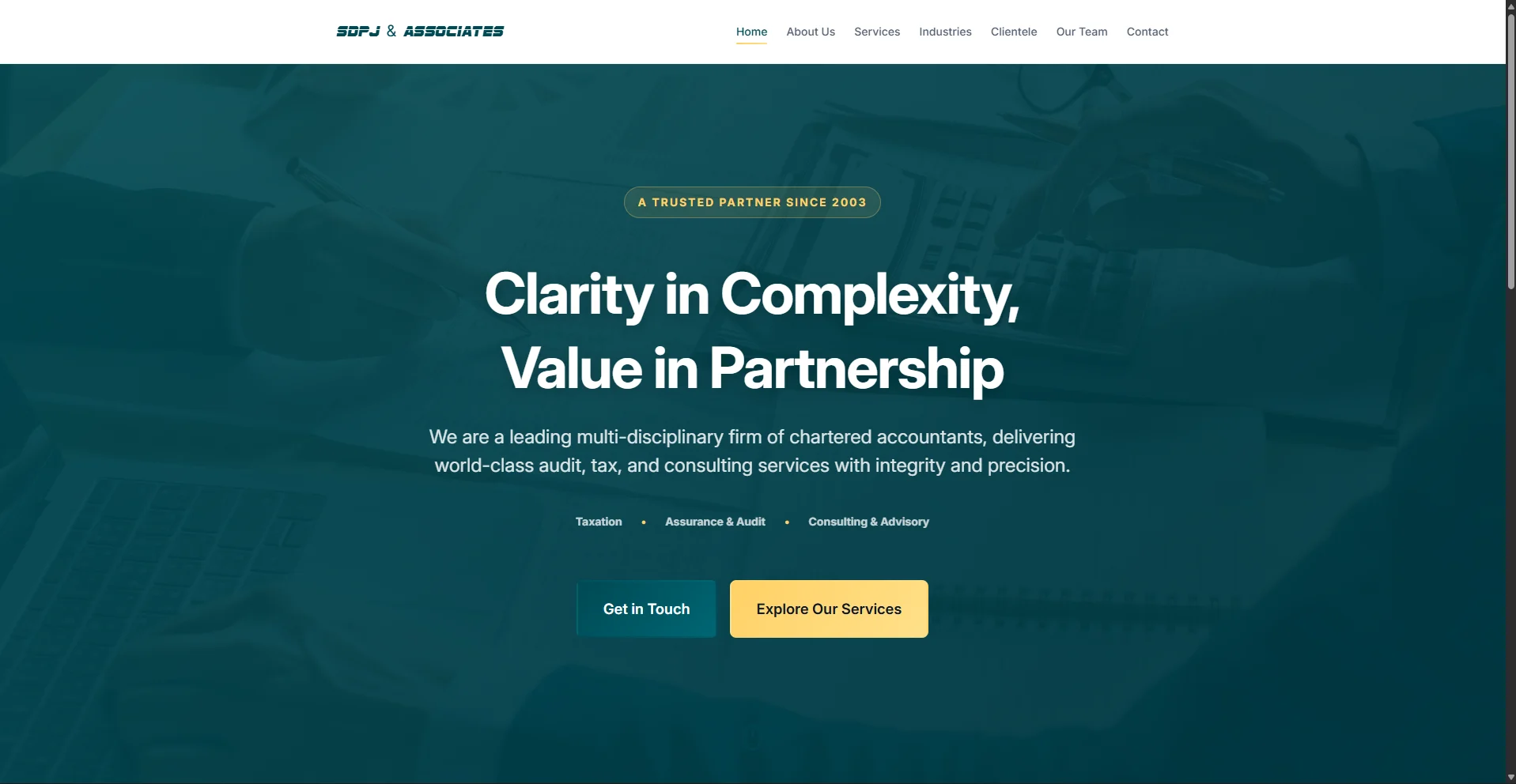
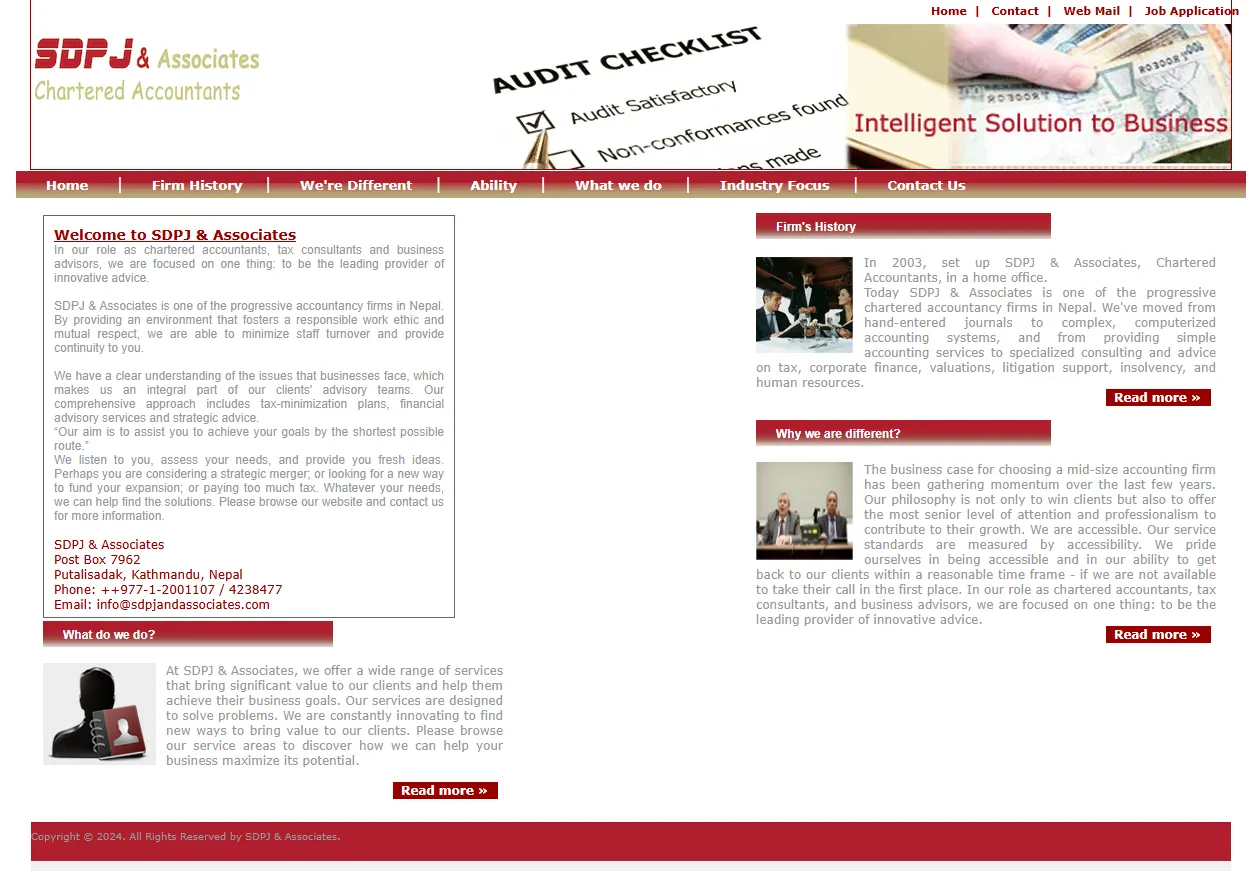
Before and after comparison slider for SDPJ. Drag or use arrow keys to compare.
Key results
0.9sLCP (post-launch)
98Lighthouse avg.
Full redesign that modernised the firm's digital presence — cleaner navigation, faster load times, and a professional look that better reflects SDPJ's credibility.
"Incline turned our outdated site into a modern conversion engine."
* Sample metrics shown. Real results verified during discovery call.
What you receive
Every project ships with four core artifacts.
Every project ships with four core artifacts that prove our work and make future teams productive: a live website, the production codebase, a detailed case study, and developer‑friendly technical and brand documentation.
Production website — live
A production-ready, deployed site on your chosen host.
Codebase & repo
The production-ready repository with CI, tests, and build scripts.
Case study
Problem → approach → results. A narrative with measurable outcomes.
Technical & brand docs
Architecture, dependencies, tokens, and brand rules.
Production website — live
The fully deployed, production site — finished, tested, and delivered under your domain or our preview link.
What's included
Live deployment URL(s) (staging + prod)
Build artifacts and release notes for the final release
Deployed assets (images, fonts) and CDN information
Why it matters: A verified live site is how your customers experience the product. We make sure it's accessible, fast, and stable.
Example checks we run: Lighthouse snapshot, smoke test results, accessibility quick-run.
Codebase & repo
Clean, documented source code in a public or private repository. Includes CI/CD configuration and instructions to run locally.
What's included
Repo link and commit history for the project
Branching strategy and release tag for final deliverable
CI pipeline config, scripts, and deployment steps
README with run/build/test commands and local dev tips
Why it matters: Engineers can onboard faster and continue development without guesswork. No vendor lock-in.
Case study — project results
A concise breakdown of goals, methods, design choices, A/B tests, and final outcomes — structured for executives and engineers.
What's included
Project goals and baseline metrics
Design and engineering approach with key decisions explained
Tests run (A/B), results, and interpretation
Final metrics: Lighthouse before/after, CTR/CVR changes, load-time improvements
Screenshots, demo links, and recommended next steps
Why it matters: The case study proves our work with numbers. It's the single best artifact to demonstrate ROI to stakeholders.
Technical and brand documentation
Developer-ready technical guide and a brand style guide to preserve visual consistency.
What's included
Technical doc: architecture diagram, frameworks, dependency list with versions, environment variables, DB/3rd-party integrations, CI details, and troubleshooting tips.
Brand guide: fonts, color tokens, spacing system, component usage, and a minimal Figma kit or PDF assets.
Maintenance checklist: routine tasks, recommended monitoring, and update cadence.
Why it matters: Teams can iterate safely. Designers and devs share a single source of truth.
Services
Work scoped to your project. Quoted to your goals.
Every engagement starts with a short discovery. We scope your project precisely, then provide a clear quote — no off-the-shelf rates, no guesswork.
Free rapid audit
Free
A quick, focused technical check to find low-effort wins — at no cost.
20–40 minute automated + manual audit
Priority list (3 recommended fixes)
Lightweight Lighthouse snapshot (FCP/LCP/CLS)
30-minute call to explain fixes and next steps
One free audit per prospect. We respond within one business day.
Site redesign
Coded, production-ready website with repository, handover docs, and a 30-day bug-fix window. Scope depends on page count and integrations.
Basic1–3 pages
Design screens, coded pages, repo with CI, basic SEO tags, accessibility checks, handover doc.
Standard4–7 pages
Basic + CMS/blog, performance tuning, analytics setup, case study skeleton.
Premium8–12 pages
Standard + two custom interactive components, third-party integrations.
Final scope depends on integrations, custom data models, and acceptance criteria. We quote after a short discovery call.
We are developing AI agents that integrate directly with the websites we build — maintaining the same engineering discipline that drives our work today.
$▌
In development
AI customer assistants
Small agents that answer product questions and guide users toward conversion — embedded directly in the sites we build.
In development
Automated content workflows
Agents that help maintain blogs, product listings, and marketing content — reducing operational overhead of keeping sites current.
In development
Intelligent lead qualification
Agents that capture and qualify leads before they reach the sales team — so every conversation starts with context.
We take on a limited number of projects each quarter so every build receives focused engineering attention. Tell us what you're building and we'll explore if it's a good fit.
Message sent.
Thanks for reaching out — we'll be in touch within one business day.